The Hindu and Buddhist history of Odisha , or rather, ancient Kalinga, is rather well known to everyone. Who hasn’t heard of the grand temples of Odisha – Puri, Lingaraj and Konark, or the great war of Kalinga which inspired Ashoka to convert to Buddhism? In contrast, very few know of the Jaina heritage of this region. This is quite a pity, since, just around 7 km from the city, is one of India’s most ancient inscriptions, which throws light on the Jaina heritage of Odisha. This inscription is the Hathigumpha inscription of Kharavela, in the hills of Udaygiri. Udaygiri and Khandgiri are two hills located opposite each other, and both are testaments to the rich Jaina heritage of Odisha. The caves at Udaygiri are older, while Khandgiri is relatively newer, but has lasted much longer, and continues to be a place of pilgrimage for Jains even today. These hills, from inscriptions and excavations of caves, shrines and rock beds, appear to have been a haven for Jaina monks, right from the ...
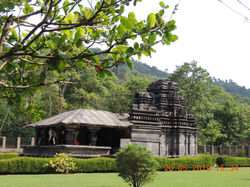
Bhubaneshwar is often called the city of temples . It is impossible to know exactly how many temples there are, but it has been estimated that there might be over 700 temples in the city. This number, while impressive, is just a fraction of the original number, which, sometime in the 13 th century, would have been about 7000. Wikipedia has a page dedicated to the Hindu temples of Bhubaneshwar , where 93 temples are listed. All these are ancient temples, built between the 7 th and 13 th centuries CE. Bhubaneshwar was once known as Ekamra Kshetra , the sacred mango grove. We know this name from an inscription at the Ananta Vasudeva temple, which mentions the name of the place, and the main temple (that we now know as the Lingaraja temple) in the mango grove. Ananta Vasudeva Temple, with a sculpture of Trivikrama in the niche It is extremely interesting to note that the Ananta Vasudeva temple is the only temple to Lord Vishnu in this city. Varaha, Ananta Vasudeva Temple Located v...